
Physics for Food - A region is rethinking its approach!
Shaping structural change in rural areas through advanced physical technology
01.01.2021 up to 30.04.2023
The aim of the funding programme is to support economically disadvantaged regions and to help establish partnerships that are sustainable and create self-sustaining structures. During the project’s duration and beyond, the project led to the creation of a strong network comprising a wide variety of businesses and research institutions.


Atmospheric pressure plasma systems are used in particular in the industrial production and further processing of plastics. The packaging industry also uses these systems successfully for coating, bonding and printing processes in food packaging.
However, direct applications in food are not yet very widespread. Their use in agriculture, in particular, presents specific challenges.
The project described here served as a key link between the flagship projects. Neubrandenburg University of Applied Sciences collated the results achieved and made them available to the other partners in the flagship projects Seeds, Crops, Food&Feed and Environment. This enabled the partners to apply the findings specifically to their own work.
In the flagship TPP (TRANSFER, PROCEDURES AND PERMISSIONS) project, the participants focused on the development and construction of demonstrators, as well as on the necessary approval procedures for the food treatment process developed.
The flagship TPP project was divided into the following three thematic areas:
Transfers, procedures and permissions
|
TPP
|
||
|---|---|---|
|
Transfer
|
Prozeduren
|
Zulassungen
|
|
Akzeptanz von Behandlungsmethoden. Generell in der Bevölkerung sowie in Unternehmen
|
Entwicklung von Demonstratoren für die Behandlung und auch Erstellung von SOP für die Behandlung der Leitkulturen sowie SOPs für das Betreiben
|
Zulassungen und chemische Analytik der lebensmitteltechnologischen Anwendungen
|
TIGRES worked closely with the project partners from the university and PiCA.
The results from the various plasma-equipped laboratory demonstrators initially showed that the grain weevils only died off partially at first, but lost over 99 per cent of their activity after five days. In addition, the team documented a significant reduction in the microbiological contamination of the barley samples.
For further experiments, the research team deliberately infected the cereal under investigation with fungal spores in order to demonstrate the fungicidal effect of the plasma. The team achieved almost 100 per cent destruction of the fungal spores, as reactive oxygen and nitrogen species from the ionised air produced by the plasma discharge were effective.
This technology therefore also offers the potential to effectively combat storage fungi such as Penicillium verrucosum.
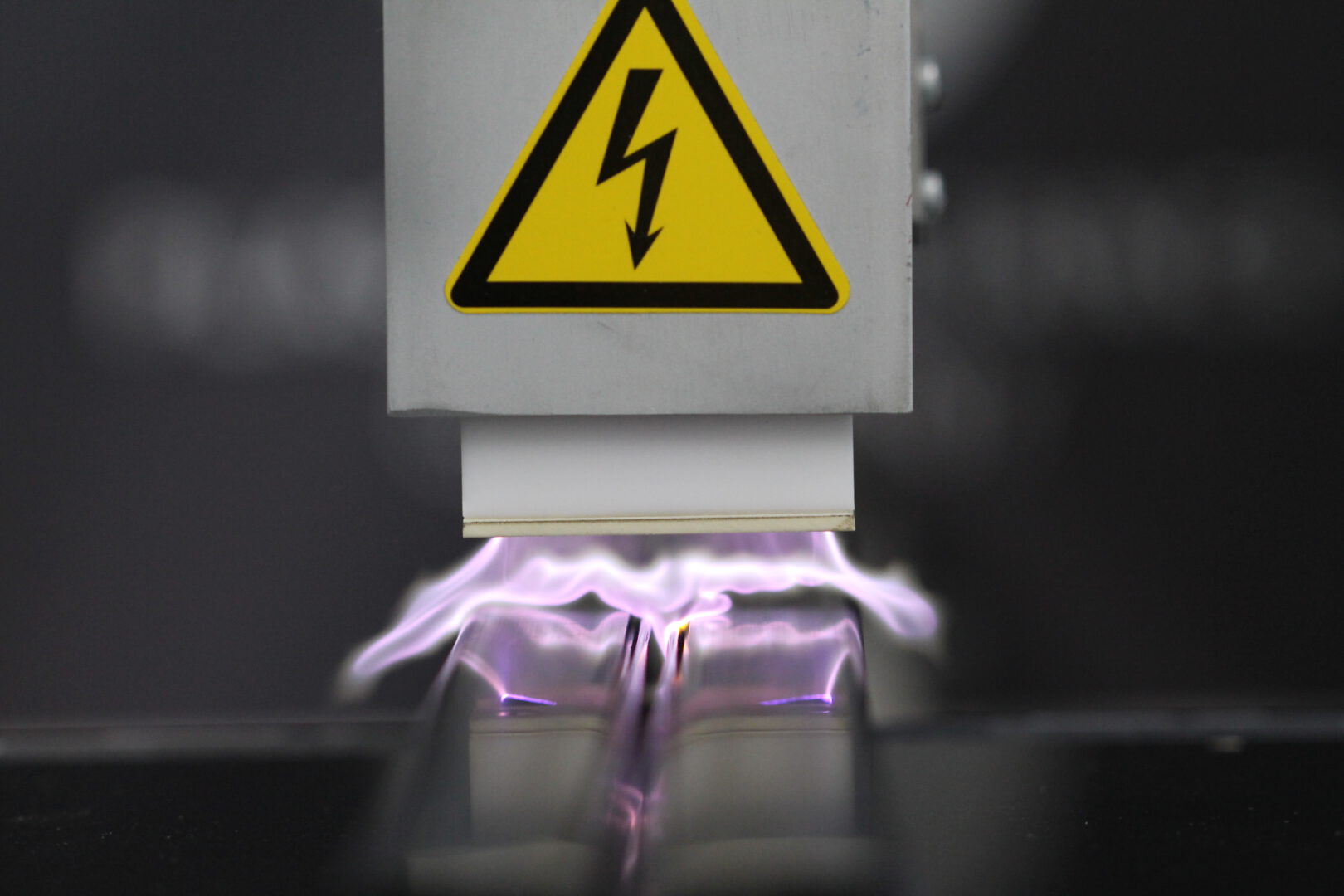
The TIGRES work packages focused on the development and operation of a demonstrator featuring a conveyor belt specifically designed for the food industry. The control unit, plasma unit and measuring devices form three key modules that provide the system with a comprehensive structure whilst maintaining its flexibility. The developers designed these modules so that all treatment parameters can be adjusted individually and as required at any time.
The Corona T-JET is used as the plasma source in this demonstrator. The primary plasma acts directly on the grain, with the discharge using only ambient air to generate the plasma and transfer it to the surface.
Following the positive results of this project, a second funding phase was applied for and approved. We are supporting the research institute with our expertise and plasma systems. Contact details and further information on the ongoing flagship project PHYSICS FOR STORAGE & FOOD (2nd funding phase: 01/2023 to 12/2025) can be found at: https://physicsforfood.org/physics-for-storage-food/